
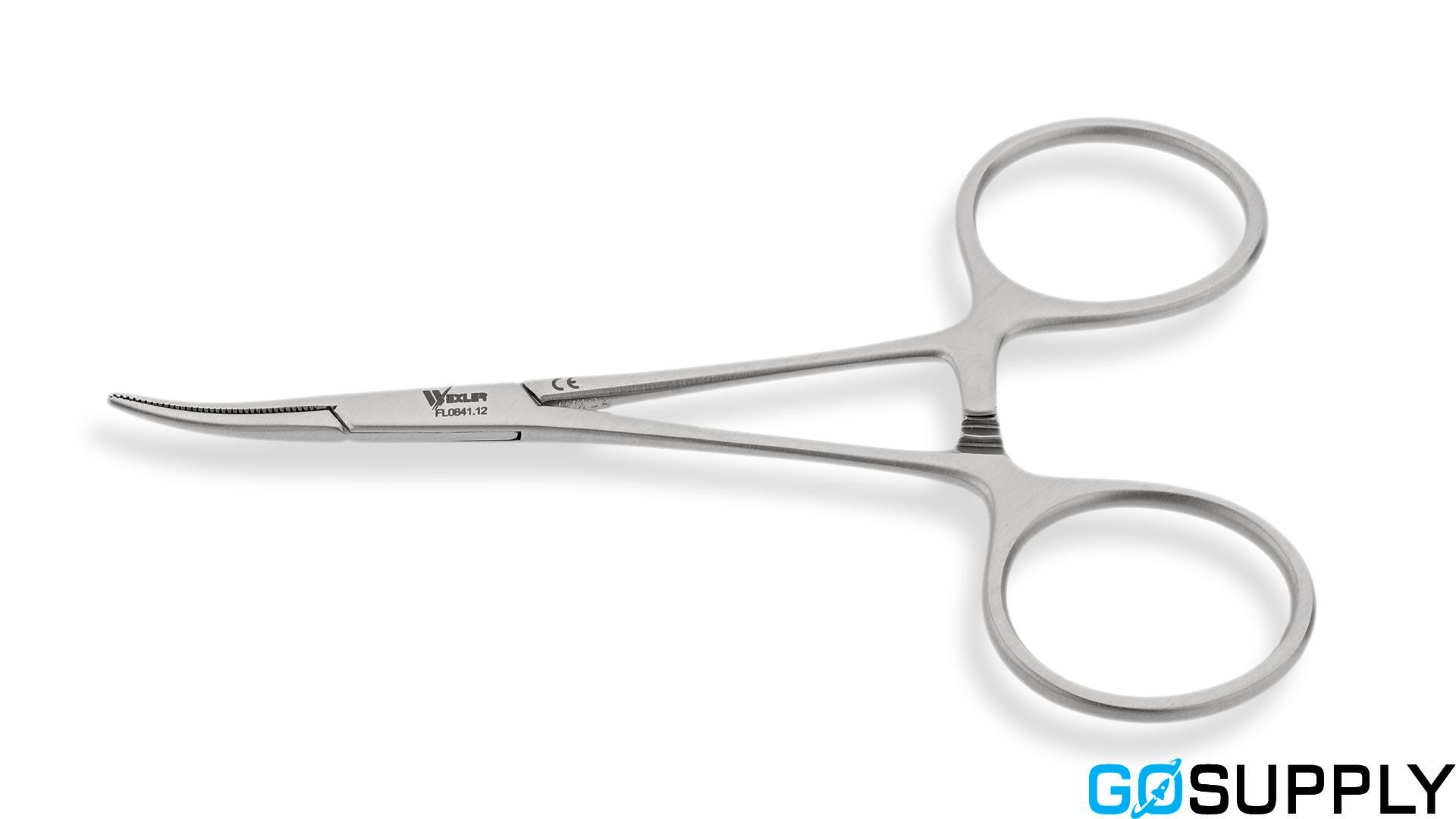
Haemostatic Forceps
$132.49 - $429.11
Choose one
2 options available
Choose one
5 options available
Choose one
6 options available
Free shipping
On orders over $150.00
Your choice
Largest range of supplies to chose from.
Nationwide Delivery
Fast delivery nationwide.
Quick Delivery
Up to Same day delivery within Sydney.
Product Details
Description
Haemostatic forceps (hemostats) are ring‑handled, ratcheting instruments used to clamp blood vessels and tissues to control bleeding, secure sutures, and improve exposure during procedures. Their locking mechanism enables graduated pressure and hands‑free occlusion, while serrated jaws provide a dependable grip on vessels or superficial fascia. Also known as ring forceps or clamps, they are found across general, trauma, dental, and specialty settings.
Design and features
- Ring handles with a ratcheted lock for controlled, incremental clamping.
- Box‑lock hinge for alignment and durability.
- Jaws available straight, curved, or right‑angle to suit access needs.
- Fine/delicate or standard tips to match tissue size and fragility.
- Typically made from surgical‑grade stainless steel; available as reusable or single‑use.
- Broad length range (about 9–20 cm) to accommodate superficial to deeper work.
Common styles and typical applications
- Hartmann/Hartman: very small, delicate tasks in confined spaces.
- Halsted Mosquito: small vessels and precise hemostasis.
- Kelly: small to medium vessels and general use.
- Crile: similar general use across a range of small to medium vessels.
- Rochester‑Pean: heavier pattern for larger bundles and tissues.
- Mixter (right‑angle): access around or beneath structures in deeper fields.
- Rochester‑Carmalt: designed for clamping pedicles or stumps before ligation.
Selection and care
- Match jaw size, curvature, and tip profile to vessel size and tissue delicacy.
- Use right‑angle patterns for deep or obscured anatomy.
- Do not use hemostats to clamp tubing; choose dedicated tube‑occluding clamps.
- For reusable instruments: clean with ratchets open, inspect tips/serrations and ratchet hold, and follow standard reprocessing to minimize wear and corrosion.